
Custodian | Industrial Turnaround | Critical Systems Execution Context
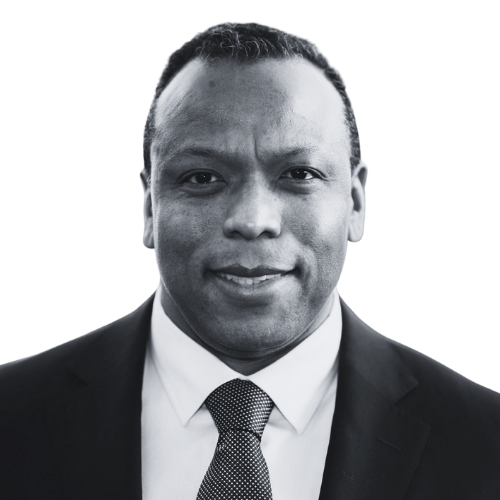
Uzoma Udeh
Uzoma Udeh’s contribution is shaped by long-term involvement in complex industrial and technological environments, where systems must function reliably across scale, geography, and constraint.
Originally trained in mechanical and manufacturing engineering, Uzoma’s early career was grounded in operational settings spanning manufacturing, maintenance, and project delivery. Over time, his work expanded across international industrial, high-technology, and resources sectors, involving direct exposure to how organisations design, operate, and sustain complex systems under commercial and technical pressure.
Across more than two decades, Uzoma has worked within global operating environments in Europe, Asia, Australia, and China, supporting activities that included technology transfer, operational coordination, organisational restructuring, and market development. His roles placed him close to the interface between strategy and execution, where decisions made upstream must hold under real-world conditions across people, processes, and infrastructure.
In later stages of his career, Uzoma’s work has increasingly focused on supporting organisations during periods of change: helping translate strategic intent into operational structure, stabilising delivery across dispersed teams, and identifying where system design, incentives, or sequencing introduce unintended strain. His experience spans industrial automation, advanced manufacturing, semiconductors, power generation, mining, and global innovation operations.
Uzoma’s perspective is attentive to how decisions propagate through operating models over time, how complexity accumulates quietly, and how misalignment between structure and reality undermines durability. His contribution emphasises coherence, continuity, and practical consequence.
Within the Aurelian Order, Uzoma acts in a custodial capacity. He supports collective examination where matters involve industrial systems, technology-dependent operations, organisational design, or global execution. His role is to help ensure that discussions remain grounded in how systems actually behave once deployed, and that considerations of scale, people, and operational reality are held alongside strategic intent.